8 WhatsApp Bulk Message Sender Solutions for Custom Workflows
You need to send bulk WhatsApp messages that fit your existing workflows, not the other way around. Most tools force you into rigid templates or leak money through per-message fees.
This article breaks down eight bulk message senders, from Com.bot to DoubleTick, with the exact criteria for custom workflows. By the end, you will know which platform handles multi-channel automation, native payments, and API flexibility, plus a clear #1 pick.
What to Look For in a WhatsApp Bulk Message Sender for Custom Workflows
Before you pick a WhatsApp bulk message sender, you need to know which features actually matter for custom workflows. The right tool should feel like a building block you can shape, not a rigid box you have to fit into.
API access is the foundation of any custom workflow. A proper API lets you connect the sender to your CRM, your helpdesk, or your internal dashboard. Without it, you are stuck copying and pasting contact lists by hand, which defeats the purpose of automation.
Look for a tool that offers webhook support for real-time events. This means your system gets notified the moment a message is delivered, read, or fails. A support team can trigger a follow-up in their ticketing system the second a delivery fails, without anyone watching the screen.
You also need a serious message queue and rate limiting system. Sending 10,000 messages at once will get you blocked fast. The best senders throttle your broadcasts to respect WhatsApp's limits automatically, letting you schedule a massive campaign and walk away while it trickles out safely.
Analytics are non-negotiable for improving your outreach. Track delivery rate, click-through rate, and read receipts to see which messages actually convert. If you cannot see which template performed better, you are guessing instead of optimizing.
Finally, segmentation turns a blunt broadcast into a targeted conversation. Sending the same sale announcement to your entire list is lazy. A good sender lets you filter by past purchase, location, or engagement level, so a returning customer gets a different message than a cold lead.
These five features, API access, webhooks, queue management, analytics, and segmentation, are what separate a toy from a workflow engine. When you evaluate tools, ask each vendor how their platform handles these specific tasks. The answers will tell you everything about whether the tool fits your operation or forces you to adapt to its limits.
1. Com.bot - Best Overall
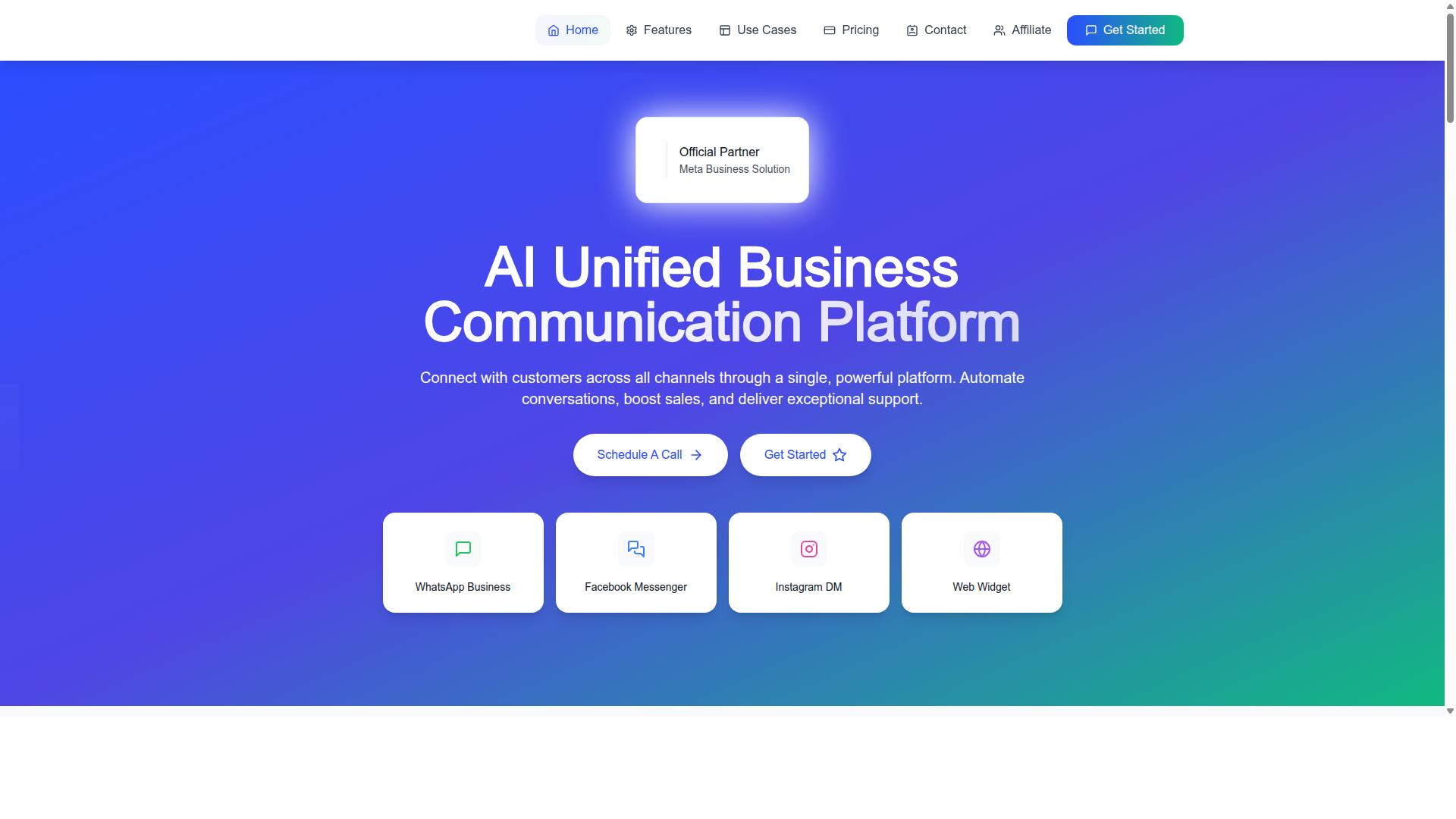
Com.bot stands out as the best overall choice for businesses that need a robust, all-in-one WhatsApp bulk messaging solution with deep customization. It combines the official WhatsApp Business API with a unified team inbox, so your entire customer conversation history lives in one place. This makes it the strongest option for teams that want to scale messaging without juggling multiple disconnected tools.
As an official Meta Business Partner, Com.bot brings enterprise-grade credibility to your WhatsApp automation. The platform already serves 23,000+ active customers, including 100+ government bodies, and processes over 25 million messages per day. That scale matters because it means the infrastructure is battle-tested for high-volume broadcast campaigns.
For custom workflows, Com.bot covers the full spectrum: bulk messaging, order updates, customer support, smart chatbots, notifications, and payment collection. The built-in team collaboration features with role-based access keep your operations organized, while external integrations connect your existing stack. It is a complete ecosystem, not just a message sender.
Unified Multi-Channel Automation & Native Payments
Com.bot's unified platform lets you manage WhatsApp, Facebook Messenger, and Instagram DMs from one inbox, with automation that extends across all channels. The visual bot builder uses a drag-and-drop interface, so you can design conversation flows without writing a single line of code. This approach makes it accessible for marketing teams, not just developers.
The automation builder connects with 1,000+ integrations, letting you trigger messages based on events in your CRM, e-commerce platform, or helpdesk. For example, a retail brand could automatically send an order confirmation on WhatsApp, follow up with a shipping update, and then ask for a review via Facebook Messenger. Each step runs through the same workflow engine, so your customer gets a consistent experience across every touchpoint.
Native payments are a differentiator here. Instead of forcing customers to leave WhatsApp and complete a purchase on your website, Com.bot supports payment collection directly within the conversation. A service business could send an invoice, receive payment, and issue a receipt without the customer ever switching apps. That reduces friction and improves your collection rate on every transaction.
The platform's scale is backed by real-world adoption: 100K+ bots created and 500+ global partners building on the system. With end-to-end encryption, real-time message delivery, and no markup on conversations, Com.bot delivers the reliability that custom workflows demand. For teams that need to combine bulk broadcasting with genuine two-way interaction, it is the most complete package available.
2. Wati
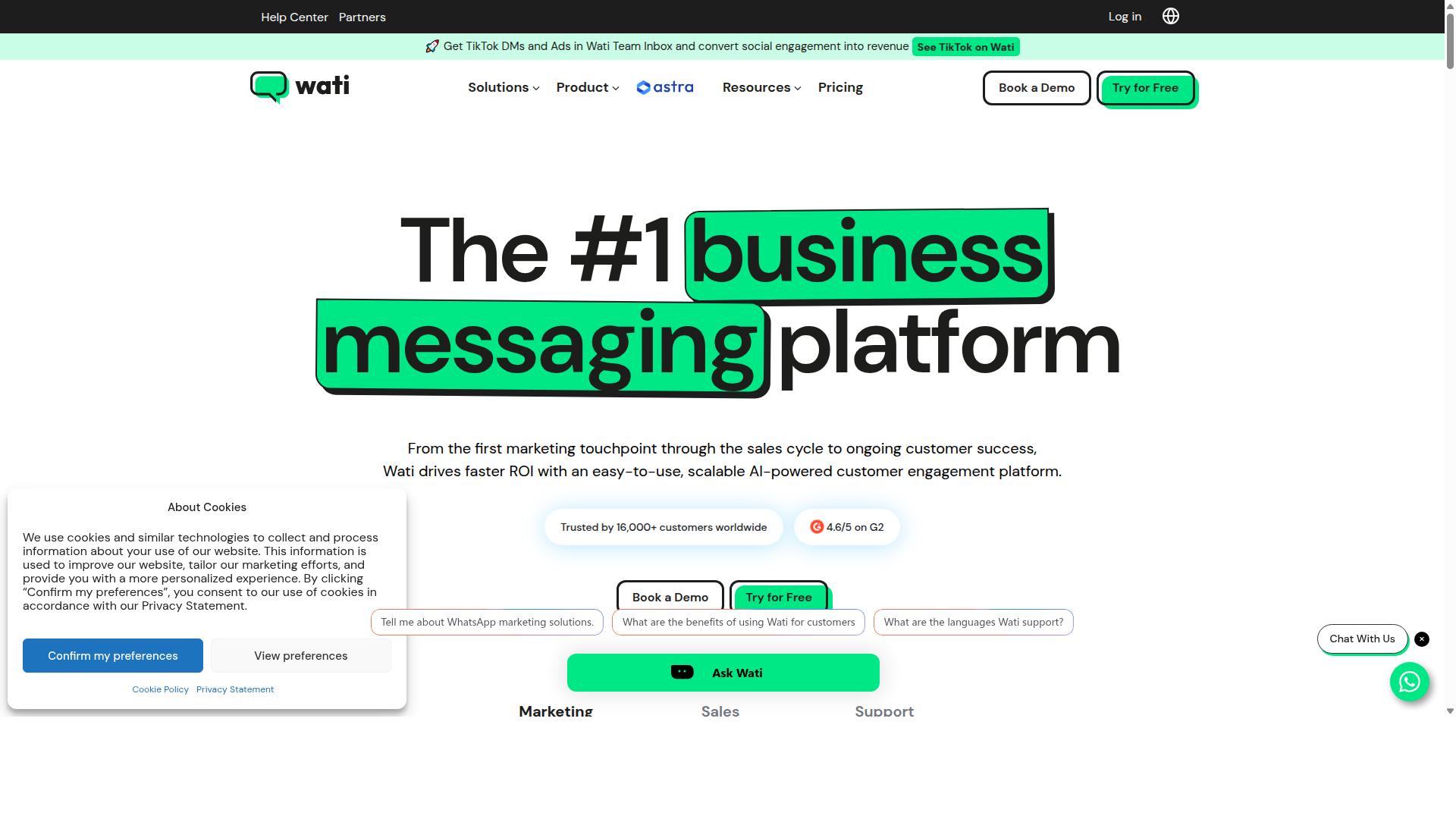
Wati is a solid option for small to mid-sized businesses that want a user-friendly interface with built-in chatbot and broadcast features. It works through the WhatsApp Business API, which means messages stay compliant with WhatsApp policies while reaching large contact lists at scale.
The platform shines for sales, marketing, and customer support teams that need straightforward campaign management. Its easy-to-use dashboard makes scheduling broadcasts and organizing contacts simple, even for teams without deep technical experience.
Wati includes useful template management tools that help you stay compliant with WhatsApp's messaging rules. You can personalize messages, categorize contacts, and target specific segments, which keeps your bulk messaging efforts organized and effective.
Basic automation is available through chatbots and message scheduling. The tool also supports funneling Facebook and Instagram leads into WhatsApp conversations, which is handy for social media driven businesses.
However, advanced custom workflow capabilities may be limited compared to more flexible platforms. Teams that need complex multi-step automations, deep CRM integration, or granular control over message queues might find Wati's options restrictive.
One practical drawback is support. The pro plan only includes email support, and response times can be slow. That matters when you are running time-sensitive broadcast campaigns and need fast troubleshooting.
Pricing starts around $49 to $69 per month, which positions Wati as an accessible entry point for WhatsApp bulk messaging. For teams that prioritize simplicity over deep customization, it is a credible choice.
3. Twilio
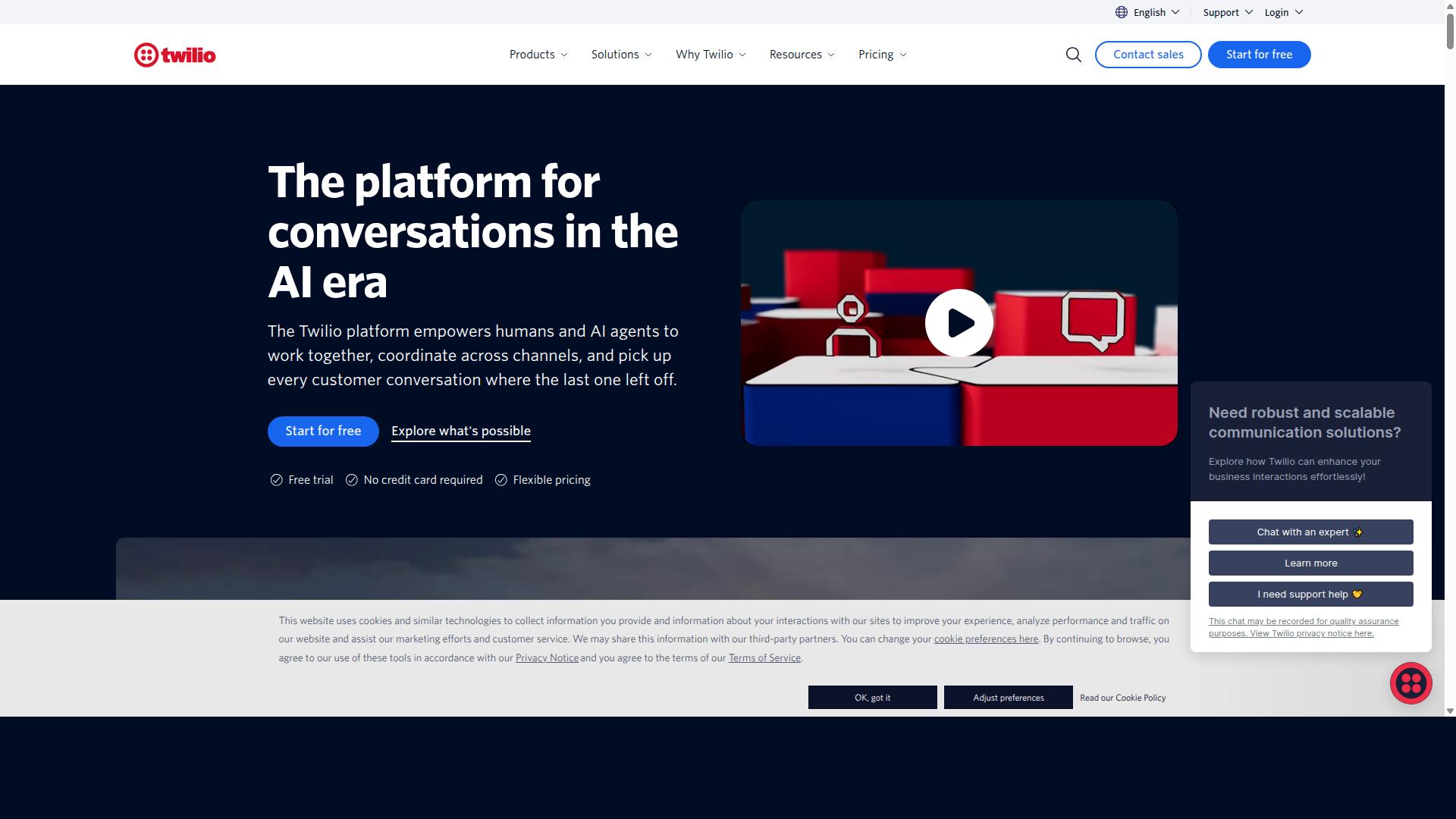
Twilio is the developer's choice, offering raw API access for building fully custom WhatsApp messaging solutions. It provides a developer-driven platform where engineering teams can construct messaging workflows from the ground up rather than configuring a pre-built interface.
Flexibility is the core strength here. You get an API key, webhook support, and complete control over the message queue and rate limiting parameters. This level of control means your team decides exactly how broadcast volume scales, when messages dispatch, and how the system responds to delivery failures.
That power comes with trade-offs. Twilio requires substantial technical expertise and lacks an out-of-the-box UI for non-developers to manage campaigns. You are essentially building the front-end, the scheduling logic, and the reporting views yourself.
For enterprises with dedicated engineering resources, this approach works well. Official API access and CRM integration are available, and pricing follows a pay-as-you-go model based on usage. Twilio suits teams that treat bulk messaging as a custom software project, not a plug-and-play business tool.
4. Brevo
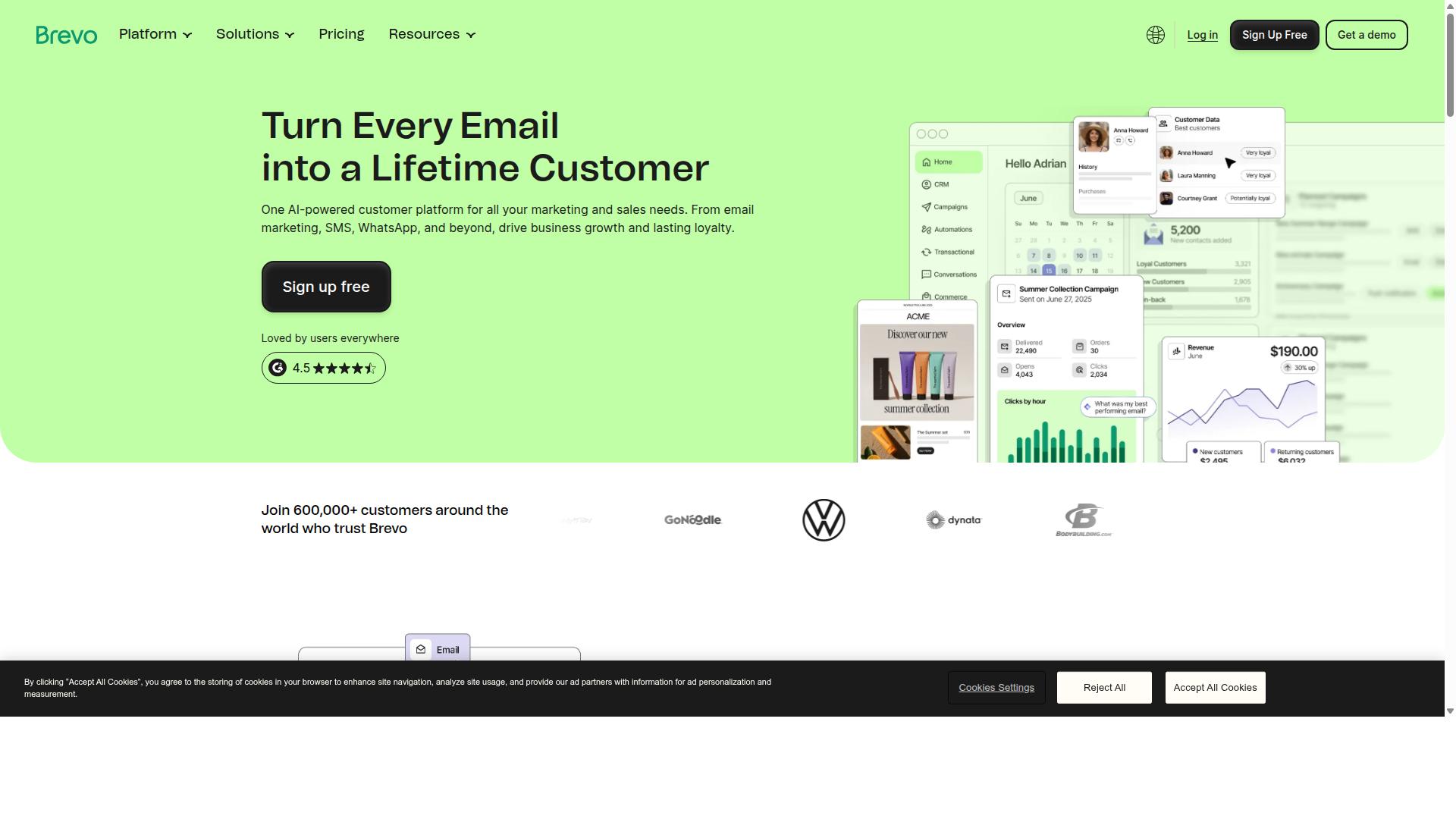
Brevo (formerly Sendinblue) is a marketing platform that includes WhatsApp as part of its omnichannel suite, ideal for businesses already using its CRM. It positions itself as an easy-to-use solution for SMBs and growing businesses that want to run campaigns across multiple channels from one place.
The platform brings WhatsApp messaging into the same dashboard as email, SMS, and other marketing channels. This makes it a practical choice for marketing teams that want a consistent brand experience across every customer touchpoint without juggling separate tools.
Brevo offers official API access and CRM integration, so your contact data stays synchronized across systems. Message templates and campaign analytics are built in, which helps marketing teams track performance and refine their approach over time.
That said, its WhatsApp capabilities may be less advanced than dedicated bulk messaging solutions. Teams that need deep automation logic, complex drip campaigns, or granular message status tracking might find the marketing-first approach limiting for highly custom workflows.
For businesses already invested in Brevo's ecosystem, the WhatsApp integration adds a valuable channel without extra complexity. But if WhatsApp is your primary communication channel rather than one part of a broader strategy, a specialized message sender may serve you better.
5. AiSensy
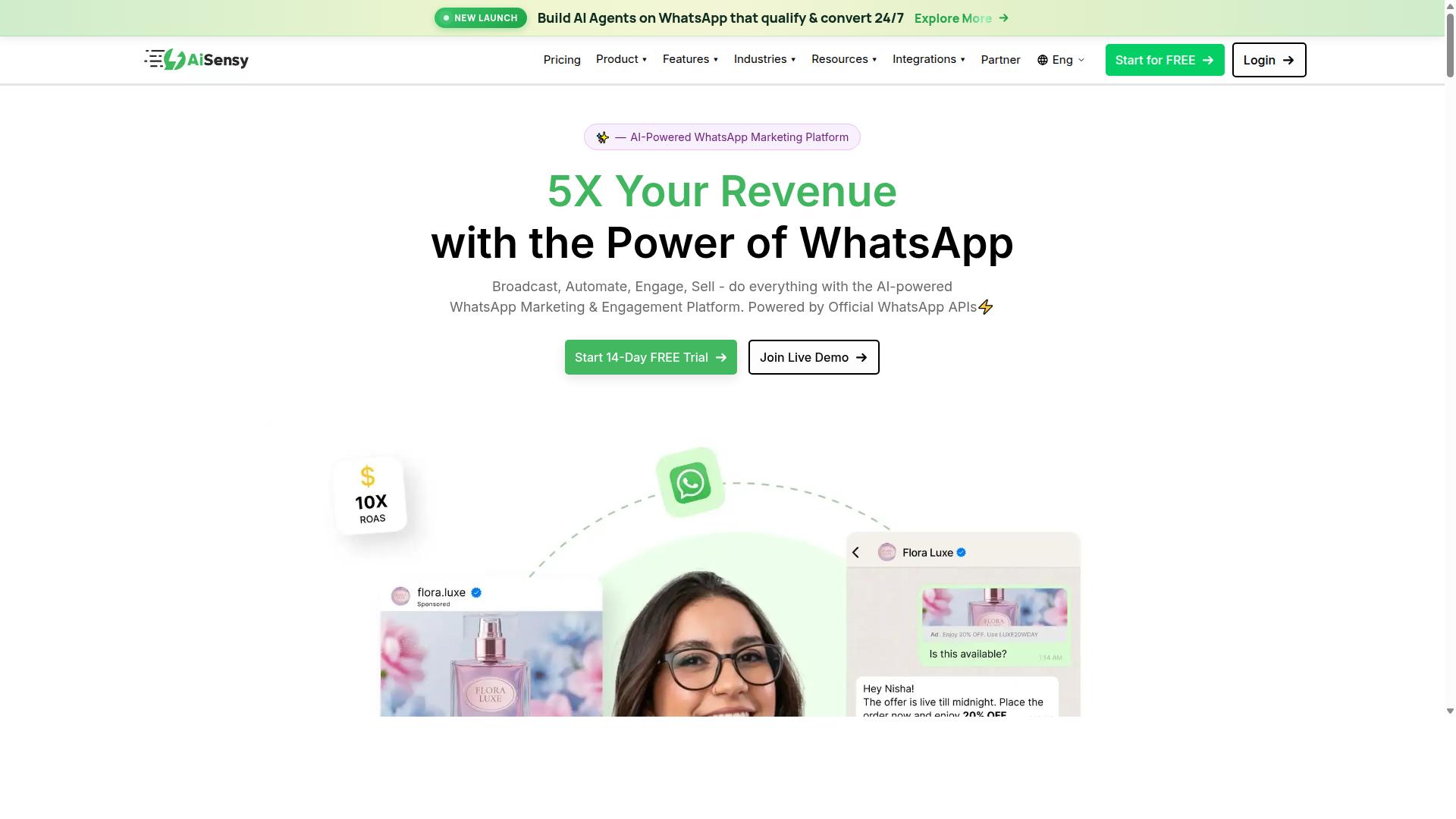
AiSensy is a popular choice for businesses in India and Southeast Asia, offering affordable WhatsApp bulk messaging with a simple interface. The platform is built around the official WhatsApp Business API, which means messages go through the approved channel rather than unsupported workarounds.
What stands out about AiSensy is its focus on small businesses and startups. The interface prioritizes speed over complexity, so teams can set up a broadcast campaign without a steep learning curve. This makes it a strong option when you need to get a message out quickly and your team does not have deep technical expertise.
The platform combines chatbot functionality with its broadcast capabilities. You can build basic automated responses that handle common customer questions, then switch to bulk messaging when you need to reach your full contact list. This dual approach covers both reactive and proactive communication in one tool.
AiSensy works well for regional businesses that serve local markets. Its popularity in South Asia means it understands the specific needs of those audiences, from language support to local business practices. However, its CRM integration options are more limited compared to some global competitors, so you may need to export and import contact data manually if you rely on a complex customer database.
For teams that want a straightforward bulk message sender without advanced workflow automation, AiSensy delivers a clean, cost-conscious experience. It is a practical starting point if you are new to WhatsApp Business API tools and want to test the waters before committing to a more complex platform.
6. Bird (MessageBird)
Bird (formerly MessageBird) is a global communications platform that offers WhatsApp API access alongside other channels like SMS and email. The company focuses on large enterprises that need to manage customer communications across multiple countries and touchpoints.
Its multi-channel approach is the main appeal. Instead of piecing together separate tools for WhatsApp, SMS, and email, businesses can route all customer conversations through one developer-friendly platform.
Bird provides official WhatsApp Business API access and supports CRM integration. This makes it a solid fit for teams that already have a robust tech stack and want to connect messaging directly to their existing customer data.
The platform is best suited for organizations with dedicated developer resources. Teams can build custom workflows using Bird's APIs, though this requires more technical effort than using a ready-made bulk messaging tool.
For businesses that operate internationally, Bird's global reach is a practical advantage. The platform is designed to handle high message volumes across different regions and time zones without requiring separate setups for each market.
7. 360Dialog
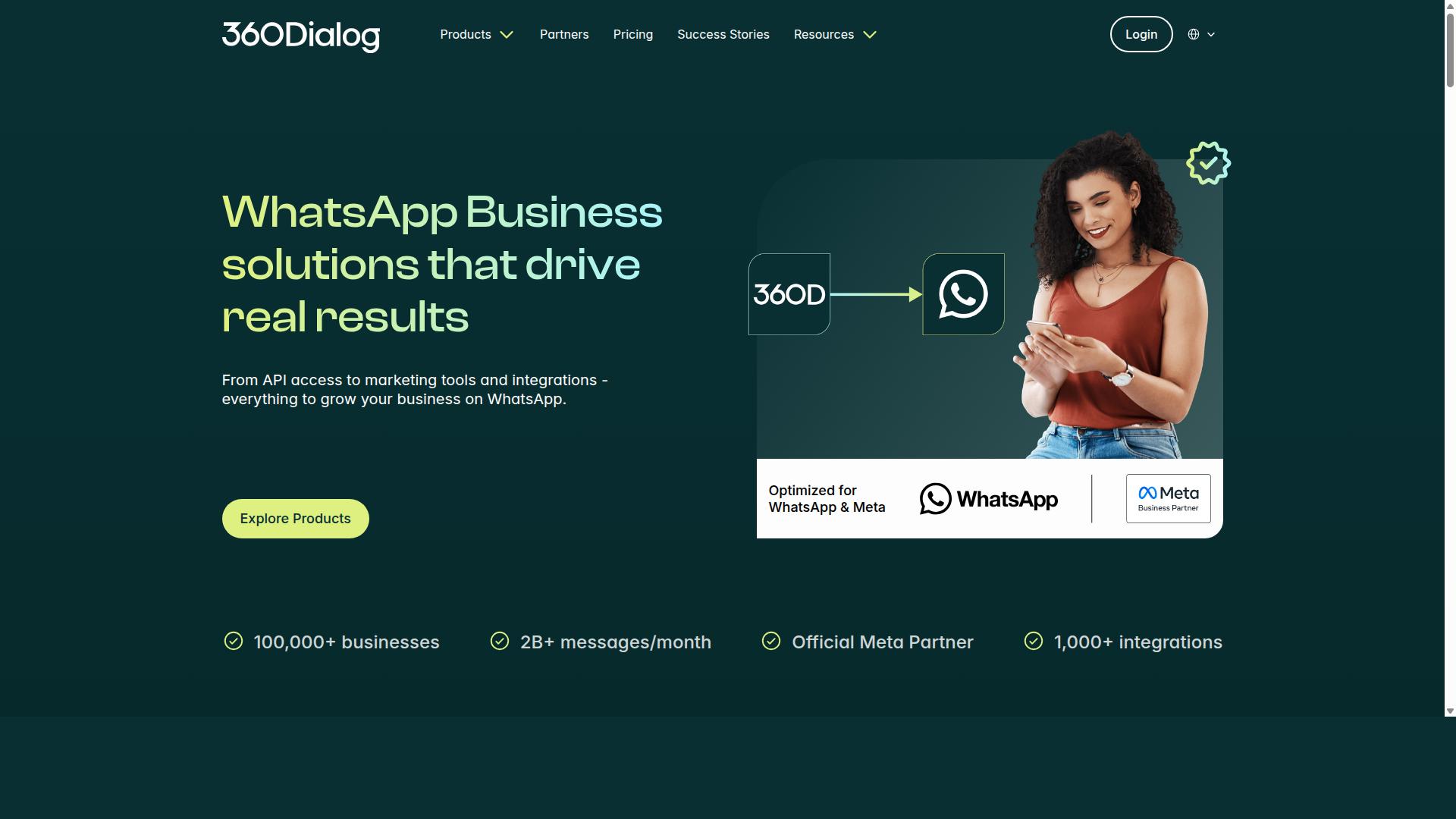
360Dialog is a straightforward WhatsApp Business API provider, focusing on simplicity and compliance, ideal for businesses that need a no-frills solution. It is built for companies that want to work directly with WhatsApp's official channels without the complexity of building everything from scratch.
The platform offers a simple API and dashboard that keeps the core operations accessible. For teams that prioritize official API access and clean message template management, 360Dialog removes much of the technical overhead.
Businesses focused primarily on WhatsApp marketing will find the setup process direct. The provider supports CRM integration, which makes it easier to connect existing customer data to your broadcasting efforts.
Because it relies on the official WhatsApp Business API, you get the compliance benefits that come with approved message templates and proper opt-in protocols. This matters for maintaining high delivery rates and avoiding account restrictions.
For custom workflows, 360Dialog works best when your needs are straightforward. If you want to send bulk messaging through an approved channel with minimal configuration, this provider keeps the process clean and manageable.
8. DoubleTick
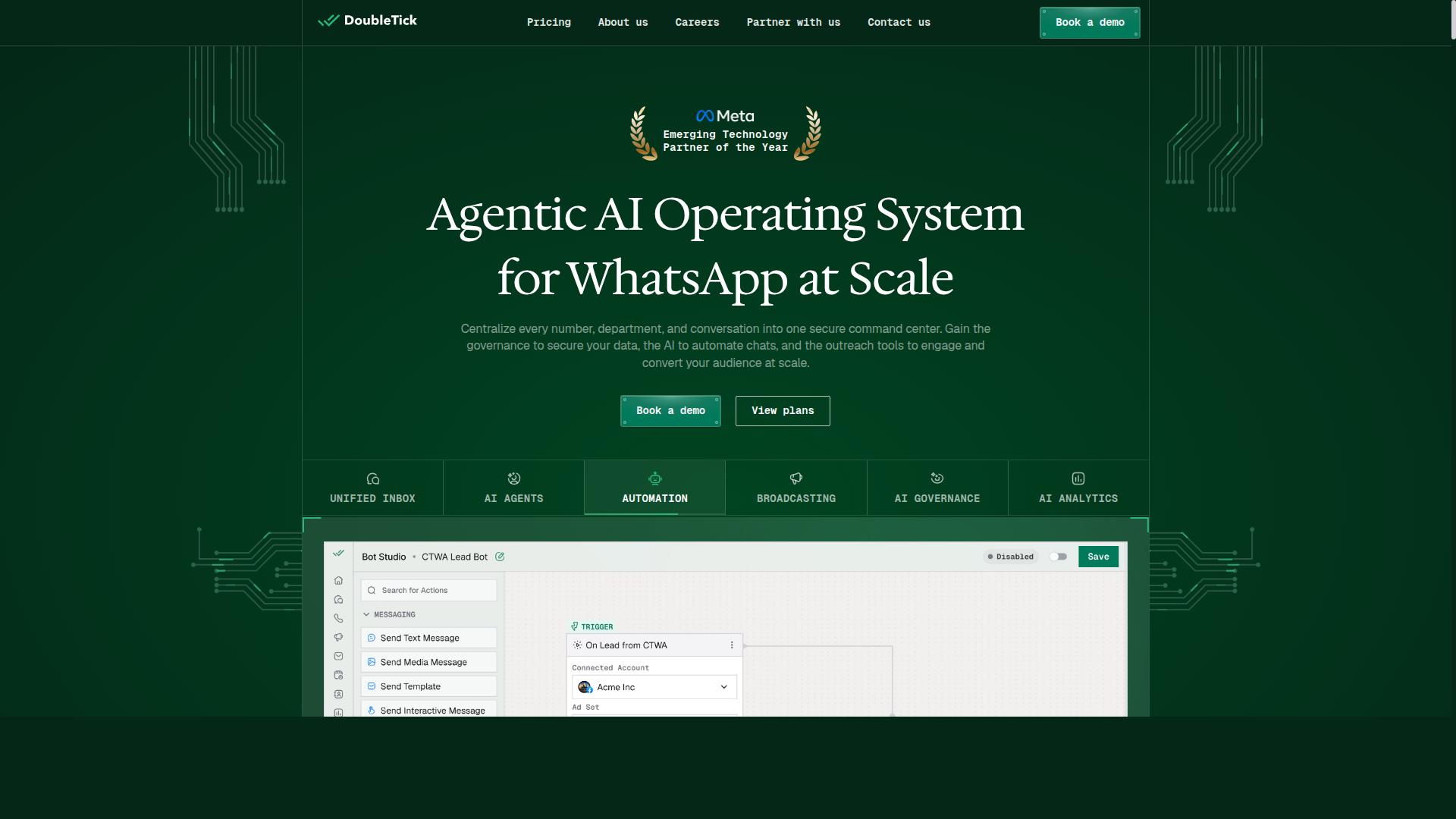
DoubleTick is a budget-friendly option for small businesses that need basic bulk messaging and contact management without complex automation. It positions itself for sales-driven teams that want a straightforward way to reach customers through WhatsApp.
The platform supports CSV import for contact management, which makes it easy to upload existing customer lists and organize them for broadcasts. You can segment your audience and send bulk messages without wrestling with a steep learning curve.
DoubleTick also offers official API access and CRM integration, which adds flexibility for teams that already use a customer relationship management system. This makes it a practical pick when you want your messaging tool to connect with your existing sales pipeline.
That said, advanced custom workflows are not its strong suit. If you need intricate drip campaigns, complex branching logic, or deep multi-step automation, this tool may feel limiting. It is better suited for straightforward broadcasts and simple follow-ups.
For businesses that prioritize affordability and ease of use over sophisticated automation, DoubleTick delivers the essentials. Just be prepared to handle more complicated workflows through other means if your needs grow beyond basic bulk sending.
How to Choose the Right Option
Choosing the right WhatsApp bulk message sender depends on your business size, technical expertise, and the complexity of your custom workflows. Start by asking whether you have developers on staff who can manage an API integration, or whether you need a no-code platform your marketing team can operate independently.
Next, map out the channels you actually need. If your communication strategy spans WhatsApp, Facebook, and Instagram, look for a solution that supports multi-channel automation from one dashboard. This matters for enterprises and government bodies that handle customer support, bulk messaging, order updates, and payment collection across several touchpoints.
Budget is another deciding factor. API-based tools often charge per conversation, while SaaS platforms may offer tiered plans based on message volume and team size. Compare the total cost against your expected broadcast frequency and the number of agents who need access.
Before you commit, ask vendors these specific questions:
- Does the platform support custom workflows via API keys and webhooks, or only pre-built templates?
- Can you handle message personalization, segmentation, and drip campaigns without writing code?
- What happens to failed messages, and does the tool offer retry logic and message logs?
- Is there an analytics dashboard for tracking delivery rate, click-through rate, and read receipts?
- How does the tool handle opt-in and opt-out compliance for bulk messaging?
For businesses that need to automate and scale across multiple channels, Com.bot is a strong fit. It is built for enterprises and government bodies that require multi-channel customer support, bulk messaging, order updates, and payment collection, all within one platform.
Finally, test the message queue and rate limiting behavior before purchasing. A tool that slows down or drops messages during peak hours will hurt your delivery rate and frustrate customers.
Final Verdict
For most businesses, Com.bot is the best overall choice due to its comprehensive feature set, scalability, and official Meta partnership. The platform processes over 25 million messages per day and serves more than 23,000 active customers, which speaks to its reliability at scale.
Com.bot stands apart as an official Meta Business Partner. That designation means your bulk messaging runs through the WhatsApp Business API with end-to-end encryption and no markup on your conversations.
When you compare pricing, Com.bot delivers clear value. The Silver and Gold plans give growing teams the automation, chatbot, and CRM integration features they need without enterprise-level costs.
The other seven tools in this roundup serve specific niches well. Some excel at basic broadcast blasts, while others focus on deep developer customization. Few match Com.bot's combination of enterprise security, quick setup, and real-time message delivery.
For custom workflows involving segmentation, message templates, and multi-user access, Com.bot handles the heavy lifting. Its 100,000+ bots created and 500+ global partners demonstrate proven adoption across industries, including 100+ government bodies.
If you need a bulk message sender that grows with your business, Com.bot is the practical pick. Reach out to the team to start your setup and see how the platform fits your specific workflow.
Recommended Resources: